Tuesday, February 26, 2008

Like Water for Chocolate


I am about halfway through the novel Like Water for Chocolate by Laura Esquirel, and I just started reading it only a few days ago. I would suggest this book to anyone who wants to read a simple and flowing novel, yet one that still has a strong and passionate story within it.

Like Water for Chocolate is truly a love story. It is engaging, and it always leaves me wanting to read more (something I cannot say about too many novels I have read in school). Tita, the protagonist, is a young woman who longs for love in a society where being the oldest daughter does not allow her to marry. Her job for her entire life is to care to her mother's wishes and desires. Unlike her other siblings, she is not allowed to love. When Pedro, a man who Tita is very interested in, asks Mama Elena, Tita's mother, for her daughter's hand in marriage, Mama Elena will not hear anything of it. She simply suggests that he marry her other daughter, Rosaura. Tita's life becomes a living hell when they get married and have a son because Tita is still madly in love with Pedro, just as he longs for her companionship.

While reading this novel, I began to think what I would do if my mother denied me of love and marriage. I guess just like Tita, I would have to pursue something that interested me tremendously in order to stay sane and busy. I love to play tennis and swim, so if I were in the position Tita was in, I would definitely spend most of my time enjoying my hobbies. For Tita, this interest is cooking.Tita obeys her mother's rules and continues to be at her hands and knees whenever she needs assistance. The only thing that can save her from a life of misery from her mother and without Pedro is cooking. Besides her intense passion for Pedro, Tita has a love for cooking elaborate dishes. What keeps running through my head as I continue to read the book is how ridiculous an idea this is to deny someone of having a significant other and loving. It seems so unfair and irrationional to me.

Although I feel as if I have empathy for Tita, I do not believe anyone can feel her heart-throbbing pain unless it is experienced firsthand. Here is a story of a precious lost love. Maybe this story can help you understand what Tita has to endure.

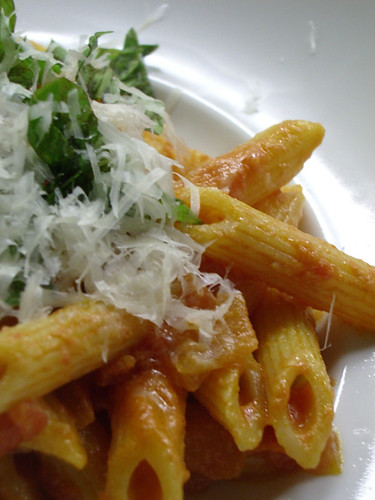
I find this story to be very uniquely written, which is part of the reason I am really enjoying reading it. I like how Esquirel incorprorates recipes into the novel, since cooking is a very important aspect of the story. Here is a link of my favorite recipe.


"My grandmother had a very interesting theory; she said that each of us is born with a box of matches inside us but we can't strike them all by ourselves; just as in the experiment, we need oxygen and a candle to help. In this case, the oxygen, for example, would come from the breath of a person you love; the candle could be any kind of food, music, caress, word, or sound that engenders the explosion that lights one of the matches...that fire, in short, is its food." - Like Water for Chocolate

I incorporated this quote because it shows the comparison between love and food, which is one strong connection evident in this novel. It also is said by John, the family doctor, who ran away with Tita in order to save her from a life of hardship and pain. I think this quote is very poetic and describes the relationship between John and Tita, as well as Tita and cooking.

Want a quick preview of the novel? Click this link.

Thursday, February 14, 2008

Do blondes really have more fun?

Everyone has heard of the expression "Blondes have more fun," but is it really true? This stereotype came to mind when I was reading The Bluest Eye. I thought of how Pecola would do anything to obtain the desired blue eyes just because she thought they would make her pretty. Just as blue eyes is considered the "norm" in the novel, blondes are known to have more fun in this day and age.

ABC News wrote an article about blondes that displayed their results from certain polls and research . A poll taken in 2007 confirms the stereotypical statement is true. 55% of men agree that they would prefer a blonde over a brunette because they are more fun. Marriage, on the other hand, is a different story. As wives, men seek women with darker hair.

It is truly sad that our society is based upon these stereotypes, just as it is in The Bluest Eye, yet they seem to prove true. The number of women who decide to dye their hair blonde has shot up a tremendous 413%. Are people really that desperate to join the stereotype? Apparently, the answer is yes. At least Pecola has a legitimate, yet unrealistic reason as to why she wants blue eyes. She longs for something to make her look beautiful; she cannot take the abuse from everyone, especially from members of her own race. Pecola is only asking for something to end all of her problems, yet people these days are changing to "have more fun."

This video by Matt Voss makes fun of the stereotype. Want a laugh? Just click the link.

Tuesday, February 5, 2008

Returning the love

As I am reading "The Bluest Eye" by Toni Morrison, I realize, as I had expected, the abuse and torment that the Blacks take from the whites. Especially since this novel is written from the perspective of an African American, I knew that the theme of racism and hatred would be prevalent. What I did not expect to see was the harsh attitude of some Blacks to others of their own race. I figured as a community, they would want to stay together and do whatever they feel is necessary to feel at home and confortable; yet, various characters throughout the novel are cruel to one another. For example, Cholly, the main character's father, gets caught by white hunters with a woman, yet he has no hatred for the men, only his black companion. He never considered, "directing his hatred toward the hunters...they were big, white, armed men. He was small, black, helpless." As I read in an analysis,some people try to, "reduce the(other)person," by giving them the "look." All in all, they are taking out their anger of the way they are being treated by doing the same to others. How does this help a community get stronger, let alone make them feel better about themselves?

In the "Bluest Eye," most characters accept that they are treated as the "others." They understand their position and where they stand in the white community, yet they still feel the need to do the same right back to others. Pecola is an excellent example of this abuse. Individuals such as Pecola who are intern "invisible" are looked down upon, even at times by their own race. It is sad that her beauty, "cannot be perceived," so she feels useless and ugly, which is why she has the desire to not be perceived by others. She has a hatred towards herself which is ironic considering her last name is Breedlove.


TCNJ view on The Bluest Eye

YouTube The Bluest Eye ending